“He Was Part Of The Problem” — Baloyi Slams Ben Youssef

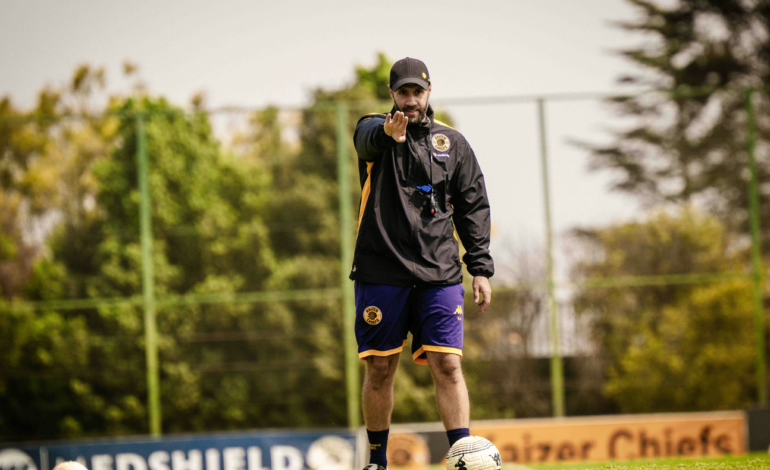
Former Kaizer Chiefs goalkeeper Brian Baloyi has claimed Khalil Ben Youssef lacked the quality required to coach the Soweto giants, saying the Tunisian “can be angry about it, but he knows it’s the truth.”
Ben Youssef parted ways with Chiefs at the end of last season before taking charge of 2025/26 Nedbank Cup champions Durban City.
During his spell at Amakhosi, he guided the club to a third-place finish in the Betway Premiership with 54 points, helping Chiefs surpass the 50-point mark for the first time in several seasons.
Baloyi’s comments came in response to remarks Ben Youssef made during an interview with SANWA, in which the former Chiefs coach claimed the club lacks the quality needed to compete consistently for major honours.
Reacting to those comments, Baloyi argued that Ben Youssef himself fell short of the standard required to coach a club of Chiefs’ stature.

“Lack of quality, including him,” Baloyi said.
“Lack of quality, including the coach. He was part of the problem. He’s not at the level of a Kaizer Chiefs coach. We can’t beat around the bush and sugarcoat it. It’s the truth, and he knows it. He can get angry when he sees this and sees me talk about it, but deep down he knows it.”
With Fernando Da Cruz now at the helm of the Soweto giants, Baloyi believes successful coaching is about far more than tactics.
He argued that understanding players and their backgrounds is crucial, but is often overlooked in South African football.
“Being a coach is not about the tactics; it’s about being a human being again,” Baloyi said.
“It’s about the human side again. And that plays a very big part in South Africa, especially with young players who come from the townships, rural communities and humble backgrounds. It’s something we always need to be cognisant of. These kids grew up in communities where, when they see a white man, they are fearful.
“Those are some of the things that people in charge of football sometimes overlook. Those are things that, as former footballers and journalists, we talk about a lot, but the conversations end there.
“We don’t always want to address them; we put them aside. I believe talking about them not only helps clubs, but also our national team.”