Erasmus Outlines Nations Championship Strategy And Unbeaten Ambitions

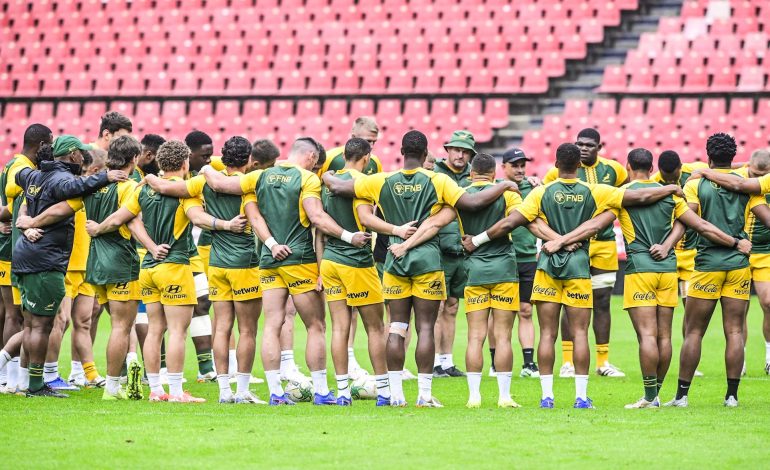
Springbok coach Rassie Erasmus insists that while building squad depth is crucial ahead of the 2027 Rugby World Cup, maintaining momentum and winning matches will always remain South Africa’s top priority.
As the Springboks prepare for a demanding international schedule that includes the inaugural Nations Championship and the highly anticipated Greatest Rivalry Series against New Zealand, Erasmus faces the challenge of introducing new players without compromising results.
For the 2019 Rugby World Cup-winning coach, success is measured first and foremost by victories.
“If you don’t keep on winning, you lose the momentum in all departments,” Erasmus said.
“You’ll lose fans too, and the mood around the Springboks will change if you don’t win matches. So we totally understand that winning will always remain our priority.”

At the same time, the Springboks are well into their long-term planning for the next Rugby World Cup cycle. Erasmus revealed that the coaching staff are constantly assessing which players are likely to form part of the squad for Australia 2027 and where further investment is required.
“We always say that 12 to 18 months out from the World Cup, we assess who might have big injuries and who might be ready for the World Cup. Then there are the injuries from December to March, which is when you really worry about it, especially if it’s a serious injury,” he said.
“I think we have a good idea of which players we can take and which players we have to give more game time.”
“Winning will always be the most important thing, but in some matches we definitely need to give more game time to players who do not have enough caps if we are going to rely on them at the World Cup.”
Despite South Africa’s recent success, Erasmus admitted the team’s ambition is to win every match and maintain momentum throughout the season.
“We would like to go unbeaten, and we’ve tried over the past two years, but we’ve lost a few matches. That is always our mindset,” he said.
The Springboks have already introduced several new faces into the national setup, but Erasmus believes more exposure will be needed for players who could play key roles in future tournaments.
“We have to give some players exposure because we are sure some of them will be needed. They might not yet have enough caps to help us win a World Cup or to put us in contention to win one.”
While player development remains a major focus, Erasmus stressed that silverware is equally important in 2026.
“Trophies are important this year,” he said.
“The Nations Championship is a new competition that runs through the middle of the year before concluding in November with the final at Twickenham, so that’s a major target for us as well. The Greatest Rivalry Series is also huge.”
However, Erasmus warned against looking too far ahead, pointing out that every opponent on the schedule is capable of derailing South Africa’s ambitions if the team loses focus.
“If you take your eyes off Argentina, they will beat you in Buenos Aires. If you take your eyes off Australia, they will hammer you in Perth, and then the momentum gets lost.”
For Erasmus, momentum remains the foundation of sustained success.
“Momentum is the most important thing, and then it comes with getting game time into players who need caps for the World Cup,” he said.
Rather than applying a one-size-fits-all approach, the Springbok management has developed individual plans for every member of the wider squad as they attempt to balance immediate success with their long-term objectives.
“It’s more individual-based, where the goals are different for each player, and almost every player is on a different roadmap.”
That personalised approach could ultimately determine whether South Africa can continue winning now while building the depth required to challenge for an unprecedented third consecutive Rugby World Cup title in 2027.